
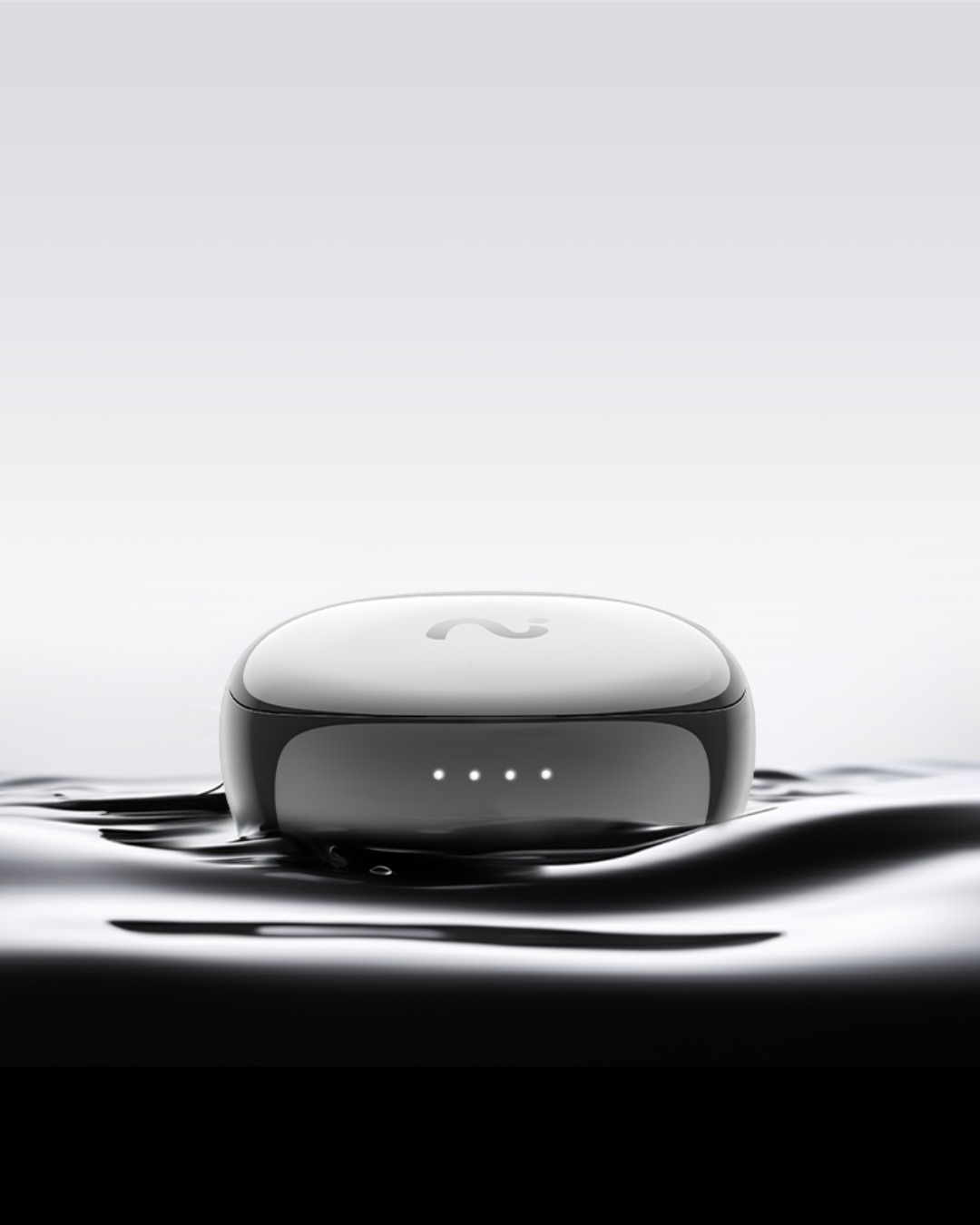
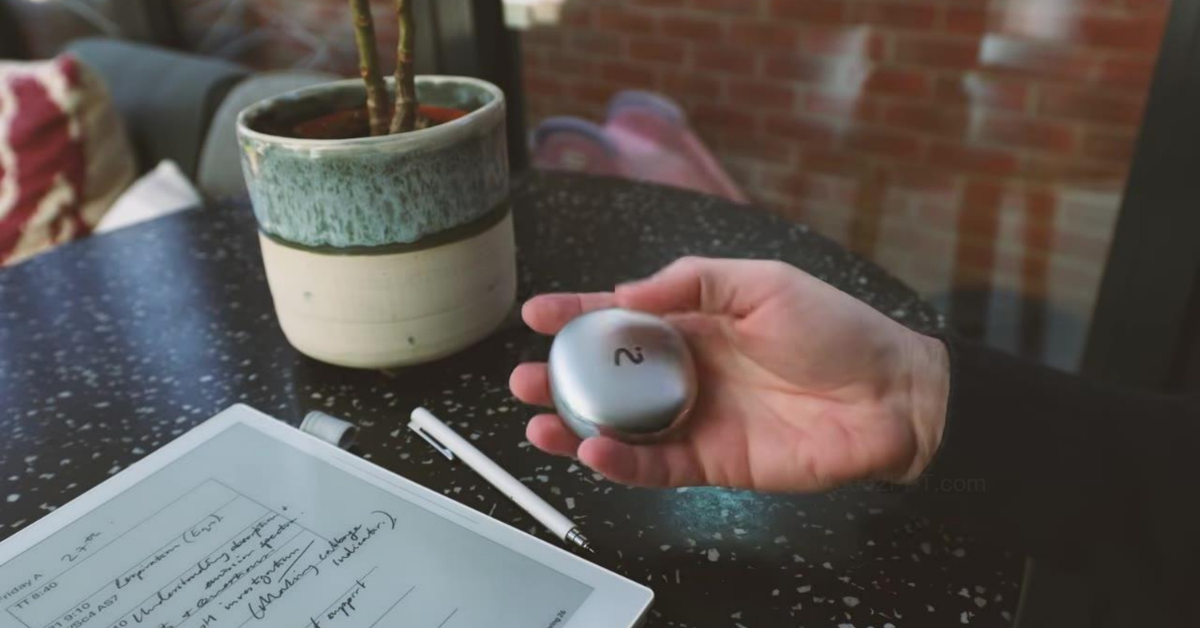
If you're trying to capture conversations and turn them into useful notes in 2026, you mainly have two real choices: AI earbuds that record and transcribe from your ear, or a dedicated AI voice recorder that sits on the desk or clips to your phone. Both promise the same outcome — accurate transcripts, AI summaries, action items, and translation. The hardware they put between you and that outcome is fundamentally different.
This guide answers one question honestly: which type of device should you buy? We'll skip the spec-sheet comparison most listicles run and focus on what actually decides the answer — the shape of your day, the kind of conversations you have, and where the friction lives in your current workflow.
Table of Contents
- Quick Answer: Which One Should You Buy?
- What Are AI Earbuds and AI Voice Recorders?
- The Core Difference (in One Sentence)
- Side-by-Side: Where Each One Wins
- 7 Factors That Should Decide Your Choice
- Real Use Cases: Which Type Fits Your Day?
- Features Both Categories Share in 2026
- 5 Mistakes Buyers Make
- Recommended Picks in Each Category
- FAQ
Quick Answer: Which One Should You Buy?
Choose AI earbuds if you:
- Spend most of your week in meetings, calls, or video conferences
- Already wear earbuds for work and want one device instead of two
- Need to capture phone calls, Zoom calls, and in-person chats with the same tool
- Want zero-friction recording — pinch to start, no app, no phone unlock
- Take cross-language calls and want live translation in your ear
Choose an AI voice recorder if you:
- Mostly capture in-person conversations — interviews, depositions, lectures, field research
- Need a dedicated device that's clearly visible to participants (consent / professional contexts)
- Record long-form sessions (3+ hours) where battery and storage matter more than form factor
- Don't want anything in your ear all day, or already have headphones you love
- Need a device that doesn't depend on a phone connection during recording
If your workflow doesn't fit either profile cleanly, the seven-factor checklist below will resolve it.
What Are AI Earbuds and AI Voice Recorders?
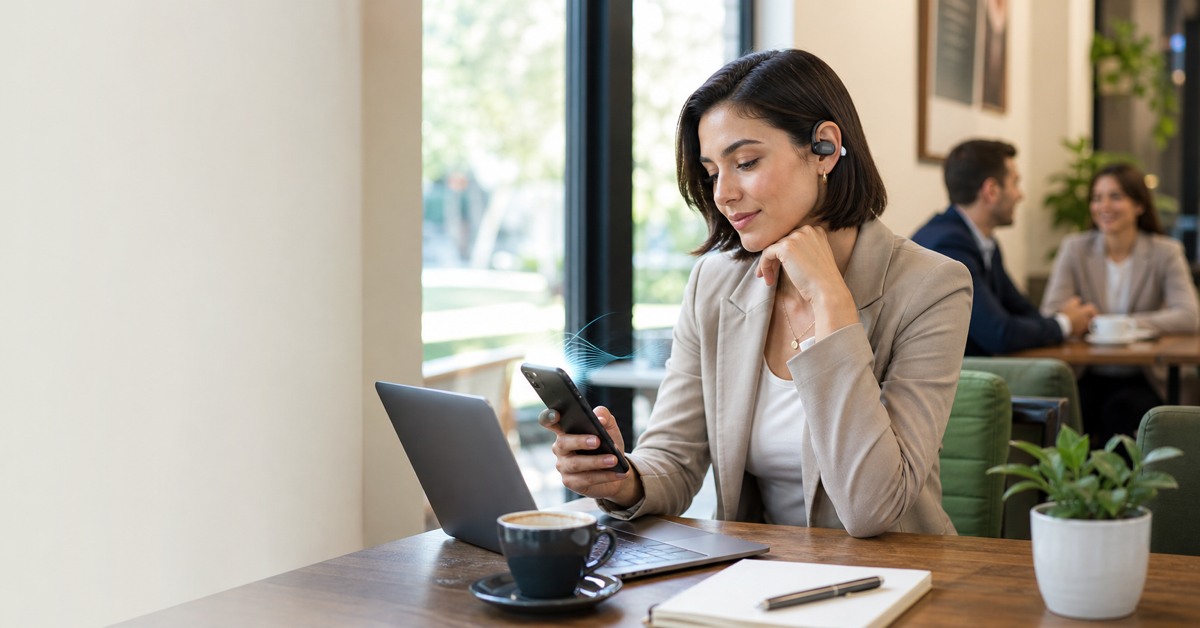
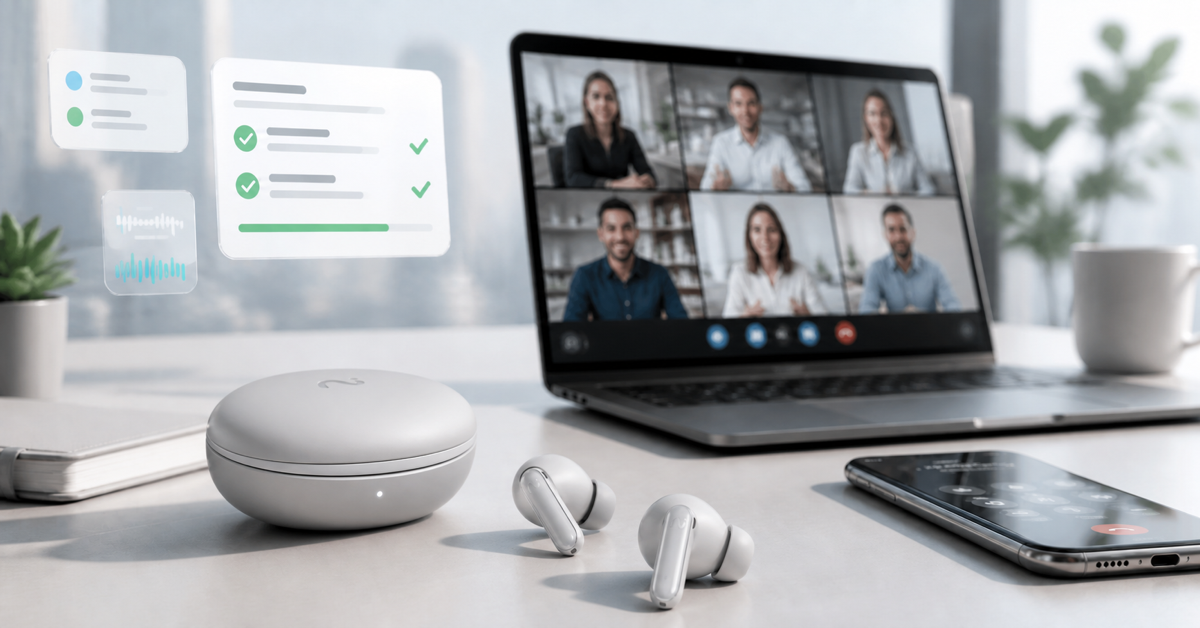
AI earbuds are wireless earbuds with built-in recording, transcription, and AI summarization. You wear them to listen to music or take calls, and the same hardware captures your meetings, generates transcripts and summaries in a companion app, and often translates across languages in real time. Examples: viaim RecDot, viaim OpenNote, viaim Nano+.
AI voice recorders are dedicated capture devices — pocketable, clip-on, or table-top — designed primarily for recording. They typically pair with a phone app or laptop for AI processing afterward (transcription, summary, action items). Examples: Plaud Note, Plaud Note Pro, Limitless Pendant, traditional digital recorders with AI add-ons.
Both have the same software story on the back end. The hardware is what's actually different.
The Core Difference (in One Sentence)
AI earbuds are listening devices that also record. AI voice recorders are recording devices that don't listen.
That single sentence resolves most purchase decisions. If listening is part of your workflow — phone calls, Zoom, music between meetings, podcasts on commute — earbuds win because they collapse two devices into one. If your workflow is mainly capture (interviews, lectures, field notes, courtroom prep), a dedicated recorder wins because every design decision optimizes for that one job.
Trying to make a voice recorder act like headphones, or trying to make headphones act like a courtroom-grade recorder, both fail in predictable ways.
Side-by-Side: Where Each One Wins
| Scenario | AI Earbuds win | AI Voice Recorder wins |
|---|---|---|
| Phone calls (1:1) | ✅ Native — same device handles call audio + recording | ❌ Awkward — needs to be near the speaker, audio quality drops |
| Zoom / Google Meet / Teams | ✅ Pairs with the call directly | ⚠️ Captures speaker output, but not optimized for it |
| In-person 1:1 (coffee, office) | ✅ Discreet, always-ready | ✅ Cleaner audio if placed on the table |
| Group meeting (4+ people, conference room) | ⚠️ Works, but voices farther from earbuds get muffled | ✅ Centered on the table, captures everyone evenly |
| Long interview (1–3 hours) | ⚠️ Comfortable for most, battery is fine | ✅ Designed for it, no fatigue |
| Lecture / classroom (3+ hours) | ⚠️ All-day comfort matters | ✅ Set it and forget it |
| Field reporting / journalism | ⚠️ Discreet but limited mic reach | ✅ Better for ambient + multi-source capture |
| Cross-language conversations | ✅ Live translation in your ear | ⚠️ Translation post-recording only |
| Walking calls, commute, travel | ✅ Made for this | ❌ Not portable in the same way |
| Music + meetings (one device) | ✅ Single device for the whole day | ❌ Need separate headphones |
| Visible recording (consent / formal) | ⚠️ Discreet (good or bad depending on context) | ✅ Obviously a recorder, easier to disclose |
| 5+ hour battery on continuous record | ⚠️ Possible but check spec | ✅ Standard |
Notice the pattern: earbuds win on integration and mobility, recorders win on dedicated-device strengths and long sessions.
7 Factors That Should Decide Your Choice
If the side-by-side didn't settle it, walk through these seven questions in order. Each one moves the answer one direction or the other.
1. What percentage of your conversations happen on a phone or video call?
If it's more than half, AI earbuds. They're the only category that handles call audio natively. Voice recorders capturing one side of a phone call from across the desk produce mediocre transcripts.
2. What's the longest single session you typically record?
Under 90 minutes (typical meeting): both work. 90 minutes to 3 hours: still both. Over 3 hours (deposition, lecture series, day-long workshop): voice recorder. Earbud comfort and battery start to matter.
3. Do you need to wear listening hardware all day anyway?
If yes — for music, calls, focus audio, or noise cancellation — earbuds collapse two devices into one. If you already own headphones you love, a voice recorder adds capture without disrupting your audio setup.
4. How important is visible disclosure of recording?
In some contexts (legal, regulated industries, formal interviews), an obviously visible recording device on the table makes consent cleaner. In others (sales discovery, casual 1:1s, walking calls), discreet capture is the point. Earbuds are discreet by design; recorders are visible by design.
5. What's the room geometry of your typical meeting?
One person across a table: either works. Four people around a conference table with one speaker far away: voice recorder, placed in the middle, captures more cleanly. Earbud mics are tuned for voices close to the wearer.
6. Do you cross languages frequently?
If you take calls or meetings in languages other than your native one, AI earbuds with live translation are a step-change in usefulness. Recorders translate after the fact, which solves a different problem (post-call review) but doesn't help you keep up in real time.
7. How much device-juggling are you willing to tolerate?
One device, one charger, one app vs. two devices, two chargers, two apps. For knowledge workers in meeting-heavy roles, the cognitive overhead of managing a dedicated recorder is non-trivial. For specialized recording roles (journalists, researchers), the dedicated device is worth it.
Real Use Cases: Which Type Fits Your Day?
The Sales Leader (15+ calls/week, mix of phone + Zoom)
AI earbuds. Discovery calls, demos, customer check-ins — the device needs to be on you, ready in 2 seconds, and handle phone + Zoom equally well. CRM-ready summaries after every call save 4–6 hours of weekly note-cleanup. Dedicated recorders force a workflow break every call.
The Consultant (client meetings, often in-person, billable hours)
AI earbuds with optional desktop backup. Earbuds for the daily flow. A USB AI note taker like viaim NoteKit for important conference-room sessions where multiple voices and pristine audio matter. The two devices share the same AI pipeline.
The Journalist / Researcher (long interviews, field work)
AI voice recorder, primary. Long-form, multi-hour sessions; you want the device visible and obviously recording for ethics; ambient and multi-speaker capture quality matter more than form factor. AI earbuds as a backup or for phone interviews.
The Founder / Operator (1:1s, board prep, partnership calls)
AI earbuds. Most conversations are calls or short in-person meetings. Searchable archive of every committed decision is worth more than perfect studio audio. Discretion matters in delicate conversations.
The Student (lectures, study groups, language learning)
Either, depending on day shape. If lectures dominate: voice recorder set on the desk, no battery anxiety. If learning is mixed with phone calls home, language exchange, and music study: earbuds.
The International Professional (cross-language calls, global team)
AI earbuds, no contest. Live translation in your ear during a Mandarin or Portuguese call is a different category of useful from "upload after for translation." If language is part of the workflow, this is the deciding factor.
Features Both Categories Share in 2026
Don't let marketing convince you these are differentiators. Both categories deliver these now:
- High-accuracy transcription in 50–80 languages (95%+ on clean audio)
- AI-generated summaries with decisions, action items, and open questions
- Speaker labeling (varies in quality, but standard)
- Searchable archive of past recordings
- Translation (live in earbuds, post-record in dedicated recorders)
- Cloud sync + companion mobile app
- Mind map / outline export for visual thinkers
What still varies: free monthly AI minutes, accuracy on accented or technical speech, recording trigger speed, platform support (Zoom/Teams/Meet), and how robust the export options are (CRM, Notion, email).
5 Mistakes Buyers Make
- Buying for the spec sheet, not the workflow. The recorder with longer battery doesn't help you if you needed a device that handles phone calls. Match the hardware to the shape of your day, not to the longer feature list.
- Underestimating friction. A device that takes 30 seconds to start recording will get used 60% as often as a device that takes 2 seconds. Friction compounds. The category leader on "daily use" is almost always the one with zero-friction capture, regardless of category.
- Ignoring your phone-call ratio. If half your conversations are on a phone or laptop call, voice recorders are the wrong category. They're not designed for this and the audio quality shows.
- Forgetting the AI minutes ceiling. Both categories meter AI processing. A pair of earbuds with 600 free minutes/month is a different deal from one capped at 100. Same for recorders. Read the fine print.
- Buying a second device when you needed a different first device. If you already have headphones and you buy a recorder, you now have two devices. If your workflow could have been solved by replacing your headphones with AI earbuds, you've added complexity instead of removing it.
Recommended Picks in Each Category
AI Earbuds — Best Overall: viaim RecDot
One-pinch FlashRecord (no app, no phone unlock), 48dB ANC, 36-hour total battery, Hi-Res audio for music, 600 free AI minutes/month, transcription and summary in 78 languages with live translation. The most balanced option in the category for meeting-heavy professionals.
Trade-offs: Pure ANC depth is below AirPods Pro 3. If you want maximum silence and don't need recording, get AirPods.
AI Voice Recorders — Standalone: Plaud Note Pro
Pocketable, dedicated, designed for in-person sessions. Best when you want a clearly-visible recording device and don't need it integrated with your headphones. We compared it head-to-head with RecDot in our Plaud Note Pro vs viaim RecDot review.
Hybrid — Desktop AI Note Taker: viaim NoteKit
USB AI note taker for laptops. Captures system audio + room mic, works with Zoom/Teams/Meet/in-person, feeds into the same viaim AI app. Best as a desk-based complement to AI earbuds, especially for conference-room sessions where multiple voices need clean capture.
For a fuller market scan including non-viaim alternatives, see Best AI Earbuds 2026. For a deeper guide on choosing AI headphones for meeting-heavy work specifically, see AI Headphones for Meetings: A 2026 Buyer's Guide.
FAQ
What's the difference between AI earbuds and AI voice recorders?
AI earbuds are wireless earbuds that record, transcribe, and summarize your conversations while also handling music and calls. AI voice recorders are dedicated capture devices that focus only on recording and AI processing. Earbuds collapse listening + capture into one device; recorders specialize in capture quality and long sessions.
Which is better for meetings?
For meeting-heavy professionals — sales, consulting, founders, anyone with 15+ calls a week mixing phone, Zoom, and in-person — AI earbuds are usually the better fit because they handle call audio natively and are zero-friction to start recording. For long, in-person, multi-speaker sessions like conference-room workshops, a dedicated voice recorder placed on the table can capture more evenly.
Are AI earbuds as accurate as voice recorders for transcription?
For voices close to the wearer, yes — modern AI earbuds match or exceed dedicated recorders on transcription accuracy. For voices far from the wearer in a large room, a centrally-placed voice recorder typically captures more clearly. Accuracy gap closes for one-on-one and small-group conversations.
Can AI earbuds record phone calls?
Yes. AI earbuds with on-device or case-based recording can capture phone calls directly from the call audio path, producing clean transcripts of both sides. Voice recorders capturing the same call from across the room produce noticeably worse audio. This is one of the strongest points in favor of AI earbuds.
Do I need both?
For most people, no. Pick the category that matches the bulk of your conversations. Some specialized roles (consultants who run both client calls and conference-room workshops, journalists who do both phone and field interviews) benefit from one of each — AI earbuds for daily flow plus a voice recorder or USB AI note taker for set-piece sessions.
Is recording my meetings legal?
Recording laws vary by jurisdiction. The U.S. has a mix of one-party and two-party consent states. Many countries require explicit consent. We covered this in detail in Is It Legal to Record a Meeting? U.S. State Laws Explained. Short version: get consent, document it, use the recordings ethically.
How accurate is real-time translation in AI earbuds?
For major language pairs (English, Spanish, Mandarin, Japanese, French, German, Portuguese) accuracy is high enough for everyday business conversations. Low-resource languages and technical or legal vocabulary still need a human review for high-stakes content. Voice recorders typically translate post-recording rather than live.
What about battery life?
AI earbuds typically run 5–8 hours of continuous recording per charge with the case extending total runtime to 30–50+ hours. Voice recorders are usually rated for longer single-session recording (10+ hours). For day-long sessions, a recorder is more set-and-forget; for everyday meeting flow, earbuds with case top-up are sufficient.
The Bottom Line
This isn't a category where one type is "better." Both AI earbuds and AI voice recorders are mature, capable, and improving. The question is which one fits the actual shape of your week.
If your conversations live in calls, video meetings, and quick in-person chats — and you want one device that handles listening, calling, and capture — AI earbuds are the right answer, and our recommendation is viaim RecDot.
If your conversations are long-form, mostly in-person, and benefit from a clearly-visible dedicated device — interviews, depositions, lectures, field research — a dedicated AI voice recorder is the better tool.
If you're not sure which side you fall on, run through the seven-factor checklist above. If you're still on the fence, email us at service@viaim.ai with a one-line description of your typical week — we'll tell you honestly which category to start with.

Share:
Best Father's Day Gifts for Working Dads 2026: 10 Picks That Actually Help
viaim RecDot vs Soundcore Liberty 5 Pro Max: Which AI Note-Taking Earbuds Actually Fit Your Workflow?