

If you already own AirPods, you probably have a good reason. They sound great, connect instantly or switch between your iPhone, iPad, and Mac without much thought. For music, podcasts, calls, commuting, and workouts, AirPods are one of the easiest tech purchases to justify.
So when someone mentions “AI earbuds,” your first reaction may be simple: Do I really need another pair of earbuds?
That is the right question. But the answer depends on what you expect your earbuds to do since AirPods and AI earbuds are not really built for the same job.
AirPods usually boost you listen while AI earbuds help you remember, organize, and act on what you hear. Once you understand that difference, the decision becomes much clearer.
AirPods Are Built for Listening
Let's give credit where it's due. AirPods are arguably the best consumer earbuds ever made for pure audio experience, they are designed for moments like these:
- Listening to music on your commute
- Taking calls while walking
- Switching from your Mac to your iPhone without reconnecting
- Blocking out noise during travel or work
- Watching videos with low-latency audio
- Using Siri for quick hands-free tasks
- Moving through your Apple ecosystem with almost no friction
If your main use case is entertainment, everyday calls, commuting, fitness, or staying connected inside the Apple ecosystem, AirPods are hard to beat.
They are polished, familiar, and effortless. But that also defines their boundary.
AirPods are designed to deliver audio to your ears. They are not designed to capture the spoken information that moves through your workday.
And for many professionals, that is where the real problem begins.
Where AirPods Stop Helping
Imagine this.
It is 3:00 PM on a Tuesday. You have just finished a 45-minute product meeting with six people. Important decisions were made. Someone confirmed the launch timeline. Someone else mentioned the final budget limit. A vendor was approved. Three follow-up tasks were assigned.
You were paying attention the whole time. Your AirPods delivered the audio clearly. But now the meeting is over.
What exactly was the budget number?
Who owned the timeline update?
Did the client say “next Friday” or “the Friday after next”?
Which vendor did the team finally choose?
What were the action items?
Unless you took perfect notes while staying fully engaged, some of that information is already gone.That is not a failure of AirPods, they can help you hear a conversation. But they do not automatically record it, transcribe it, summarize it, extract action items, or make it searchable later.
Most professionals run into this problem every week:
- You leave a meeting and immediately forget one key detail.
- You remember the general conversation but not the exact wording.
- You need to update a teammate who missed the call, but your notes are incomplete.
- You want to stay present in a conversation, but you also need a record of what was said.
- You have a client call, interview, or consultation where accuracy matters.
- You discuss something important informally, and there is no written follow-up.
This is the gap AI earbuds were built to close.
AI Earbuds Are Not Just “Better Headphones”
AI earbuds are not trying to out-sound AirPods. That's not the game. They're productivity tools that happen to live in your ears — designed to capture, transcribe, and organize the spoken information flowing through your professional day.
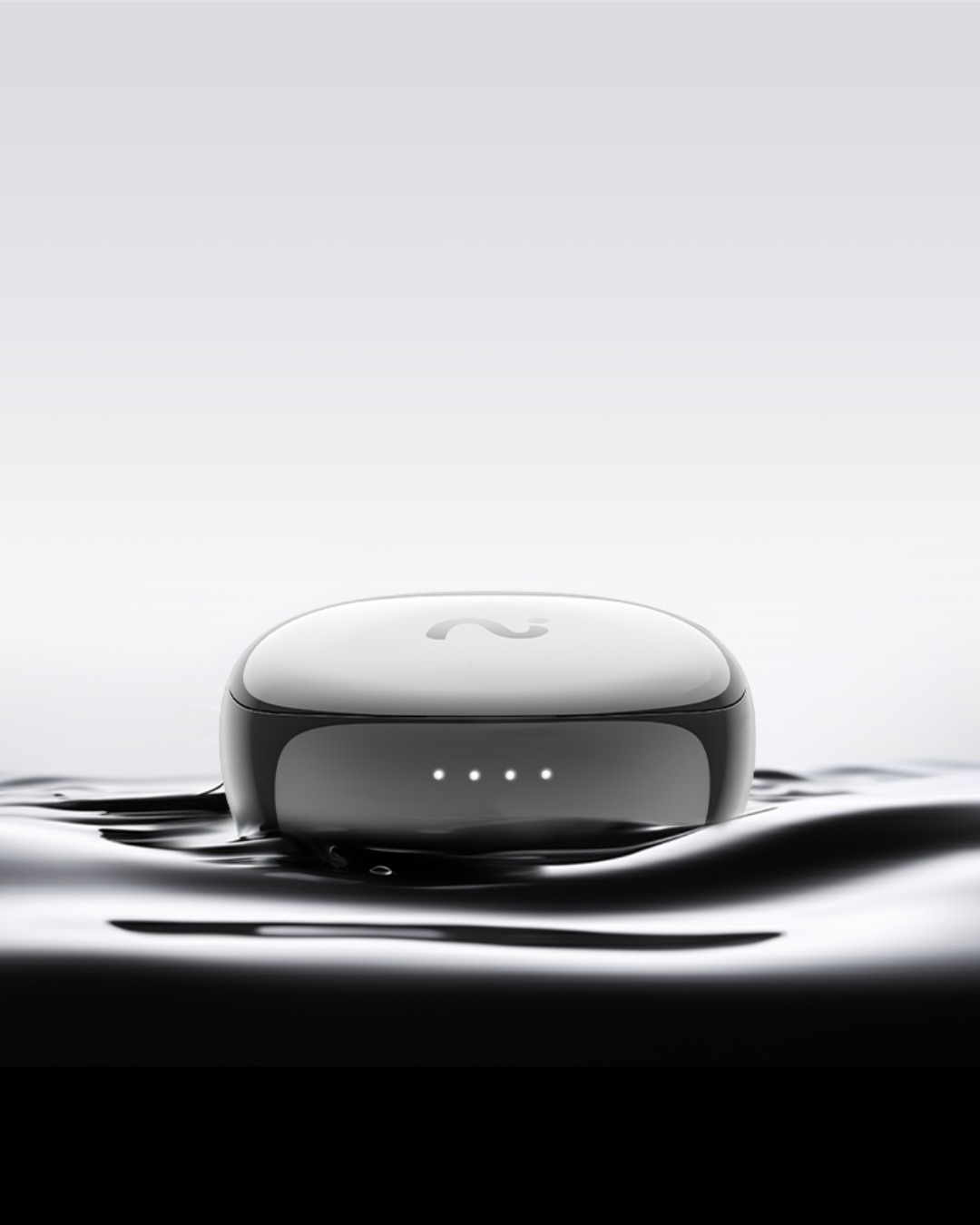
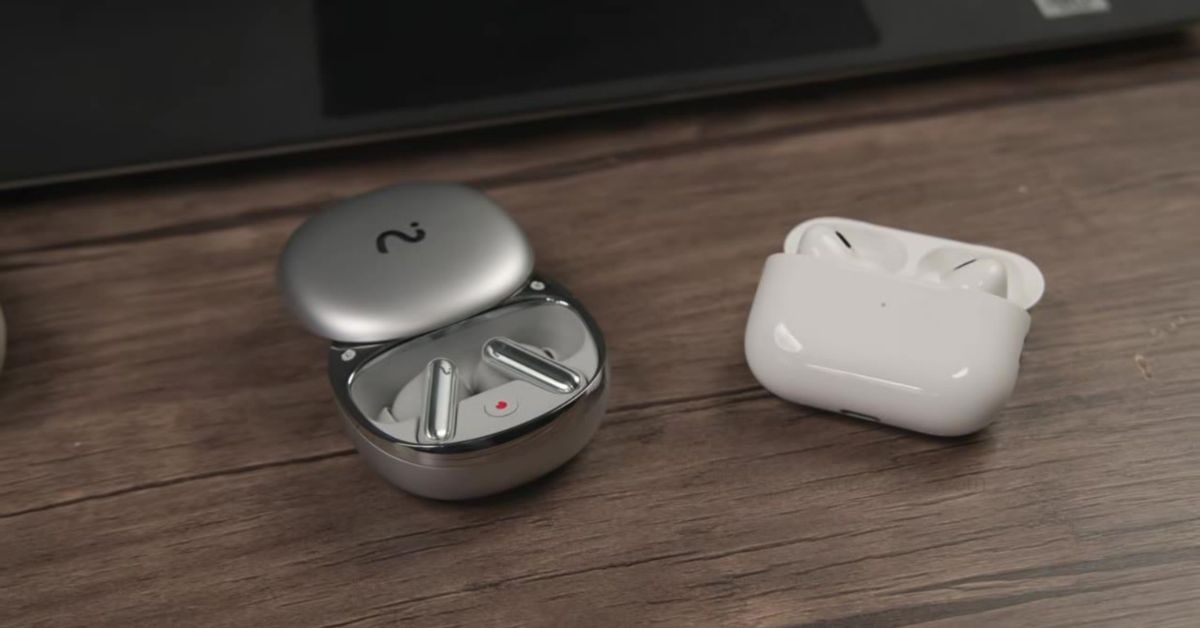
The viaim RecDot is a clear example of this category done right. It looks and feels like a premium pair of earbuds — Hi-Res Audio, active noise cancellation, comfortable enough for all-day wear at just 4.8g per earbud. But what happens beneath the surface is what makes it a different kind of device entirely:
- Always-ready recording — Tap once to start capturing any conversation, meeting, or lecture. No phone required to initiate.
- Real-time transcription in 78 languages — See words appear as they're spoken, with speaker identification.
- AI-powered summaries & action items — When the meeting ends, a structured summary with key decisions and to-dos is already generated.
- Real-time translation — Speak your language, hear theirs. A genuine working tool for multilingual teams and international business.
- Cross-platform support — Works with iOS, Android, Windows, and Mac. Not locked to any ecosystem.
An Honest Comparison: Where Each One Wins
Here's the most transparent way to look at these two devices. They each dominate their respective lane:
| Use Case | AirPods | AI Earbuds like viaim RecDot |
|---|---|---|
| Music and entertainment | Excellent | Good, but not the main focus |
| Apple ecosystem integration | Excellent | Cross-platform flexibility |
| Noise cancellation | Strong, especially on AirPods Pro models | Strong enough for work and everyday environments |
| Everyday calls | Excellent | Good, with added recording and transcription features |
| Meeting recording | Not the core use case | Yes |
| Real-time transcription | Not the core use case | Yes |
| AI meeting summaries | Not available as a native earbud workflow | Yes |
| Action item extraction | No | Yes |
| Searchable conversation history | No | Yes |
| Real-time translation | Limited depending on device/app ecosystem | Designed as a core productivity feature |
| Capturing quick ideas | Not the core use case | Yes, with features like FlashRecord |
| Best for | Listening, entertainment, Apple users | Meetings, calls, notes, translation, productivity |
Reading the table: If you're buying earbuds primarily to enjoy music, block noise, and stay seamlessly inside Apple's world, AirPods Pro 3 are untouchable. But if you're buying earbuds to work — to capture meetings, recall decisions, break language barriers, and keep your professional knowledge intact — the comparison swings entirely in RecDot's favor, because AirPods simply cannot do those things at all.
Which One Belongs in Your Day?
Rather than more spec comparisons, here's the honest decision framework:
AirPods are your best choice if:
- Music quality and immersive spatial audio matter most to you
- You want the absolute best noise cancellation on the market
- Your workflow doesn't produce many recordable meetings or important calls
- You live inside the Apple ecosystem and value seamless switching between devices
- Fitness tracking and health features (heart rate, hearing test) appeal to you
- You need IP57 protection for intense workouts or outdoor conditions
AI earbuds like RecDot are essential if:
- You attend multiple meetings per week that produce decisions and action items
- You've ever left a meeting and immediately forgotten key details or who committed to what
- You conduct interviews, client calls, or consultations that need accurate word-for-word records
- You work across languages or with international colleagues and need real-time translation that actually works
- You want to be fully present in conversations without the mental overhead of note-taking
- You frequently have ideas on the go and want to capture them with a simple pinch — no phone fumbling
- You need one device that works across Apple, Android, and desktop platforms equally
What Using RecDot Actually Looks Like
It's worth painting the picture beyond spec sheets. Here's what a real day looks like with RecDot:
9:00 AM — Morning standup. You walk in wearing RecDot like any normal pair of earbuds. Meeting starts. You pinch the stem once. That's it — recording begins. You participate fully. No laptop open for note-taking, no "sorry, can you repeat that?" You're just... present.
9:25 AM — Meeting ends. Before you reach your desk, the viaim app has your complete transcript with speakers labeled, an AI-generated summary (3 decisions made, 5 action items assigned, 1 follow-up meeting needed), and a shareable link you can drop into Slack.
11:00 AM — Vendor call on pricing. You're on the phone negotiating contract terms. RecDot captures the entire call automatically. Twenty minutes later, you have a searchable transcript and the exact quote you need for the budget approval email. No more "I think they said $12 per unit" — you have the words.
1:15 PM — Walking back from lunch. An idea hits you for next quarter's campaign positioning. Pinch the earbud. Speak for 15 seconds. Done. It's transcribed and waiting in your app when you're ready to develop it. No unlocking your phone, no opening an app, no typing into a notes app with one thumb.
3:00 PM — All-hands with executives. Important company strategy discussed. You record the entire thing. Later that day, you search the transcript for "Q3 targets" and find the exact number the CFO mentioned — something three other people in the meeting remember differently.
4:30 PM — Video call with your Paris-based team. They speak French; you respond in English. Real-time translation flows both ways through the earbuds. No interpreter needed, no awkward pauses, no miscommunication about deliverables.
This is the daily reality RecDot enables. And it's a reality that AirPods — no matter how brilliant they sound — were never designed to deliver.
Want to see exactly how each feature works? The viaim User Guide walks through setup and every use case step by step.
Do You Need Both? The Honest Answer
For many professionals, the answer is genuinely yes — and it's not about luxury or redundancy. It's about the right tool for the right job, just like having both a laptop and a phone.
AirPods for: weekends, workouts, commutes, music sessions, gaming, and casual calls where you want the absolute best audio immersion and noise cancellation.
RecDot for: Monday through Friday — every meeting, every important call, every brainstorm, every quick idea capture where what's being said has professional value that shouldn't evaporate into thin air.
Some users find they naturally reach for different earbuds at different times of day. Others — especially those who prioritize AI productivity features and don't need Apple's deep ecosystem integration — discover that RecDot becomes their only pair.
If you're still deciding between viaim models, compare all viaim AI earbuds side by side. Or read RecDot vs. OpenNote if you're choosing between the in-ear RecDot and the open-ear OpenNote form factor.
The Bottom Line
AirPods are the finest consumer earbuds money can buy. They make music sound magical, silence the world around you, and integrate flawlessly with every Apple device you own. For pure listening pleasure, nothing touches them.
But they were designed for a world where the job of earbuds ends the moment the audio stops playing. They don't record the meeting. They don't capture the action items. They don't transcribe the client call. They don't translate the conversation with your overseas supplier. They don't grab the idea you had on the walk before it fades.
AI earbuds like RecDot exist because that world is no longer enough. For anyone whose work depends on spoken information — and whose success hinges on actually retaining and acting on it — the question isn't whether you can afford another pair of earbuds. It's whether you can afford to keep losing everything you hear.
→ Explore the viaim RecDot | Compare all models | Best AI Earbuds 2026 | FAQ


Share:
Best AI Earbuds 2026: What They Do and How to Choose
Best Father's Day Gifts for Working Dads 2026: 10 Picks That Actually Help