
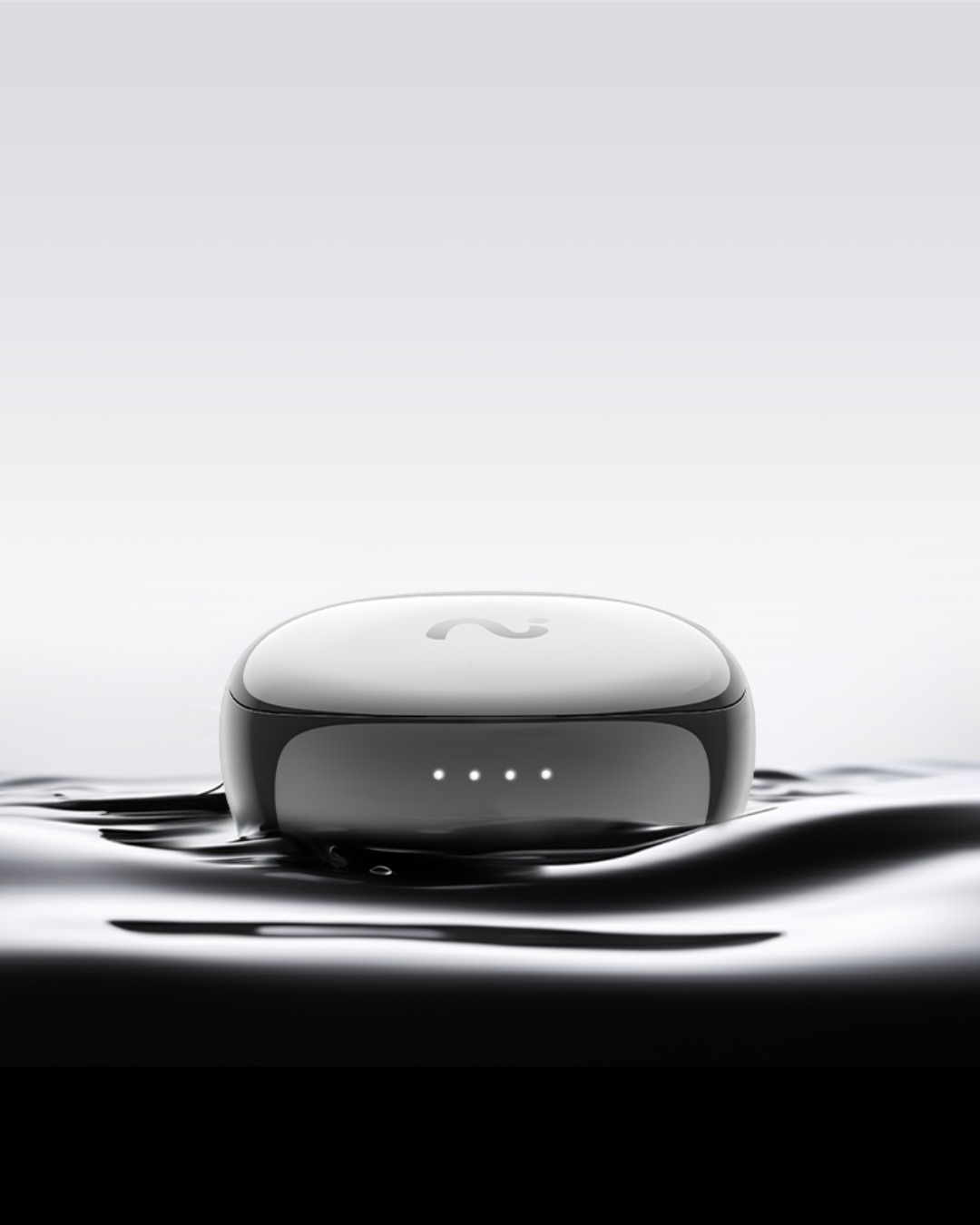

Earbuds used to do one thing: play audio. In 2026, the best earbuds don't just deliver sound — they understand it. They transcribe your meetings, translate foreign languages in real time, generate summaries of your conversations, and build a searchable archive of everything you've heard.
Welcome to the age of AI earbuds — wearable devices that combine premium audio with artificial intelligence to turn spoken words into organized, actionable information.
But the category is still new, and not all "AI earbuds" are created equal. Some slap a basic voice assistant label on standard Bluetooth earbuds. Others deliver genuine intelligence that changes how you work. This guide cuts through the noise (literally) so you can find the right pair for your life.
What Exactly Are AI Earbuds?
AI earbuds are wireless earbuds with built-in artificial intelligence capabilities that go beyond standard voice assistants like Siri or Google Assistant. While traditional smart earbuds can set timers or play a playlist, AI earbuds can:
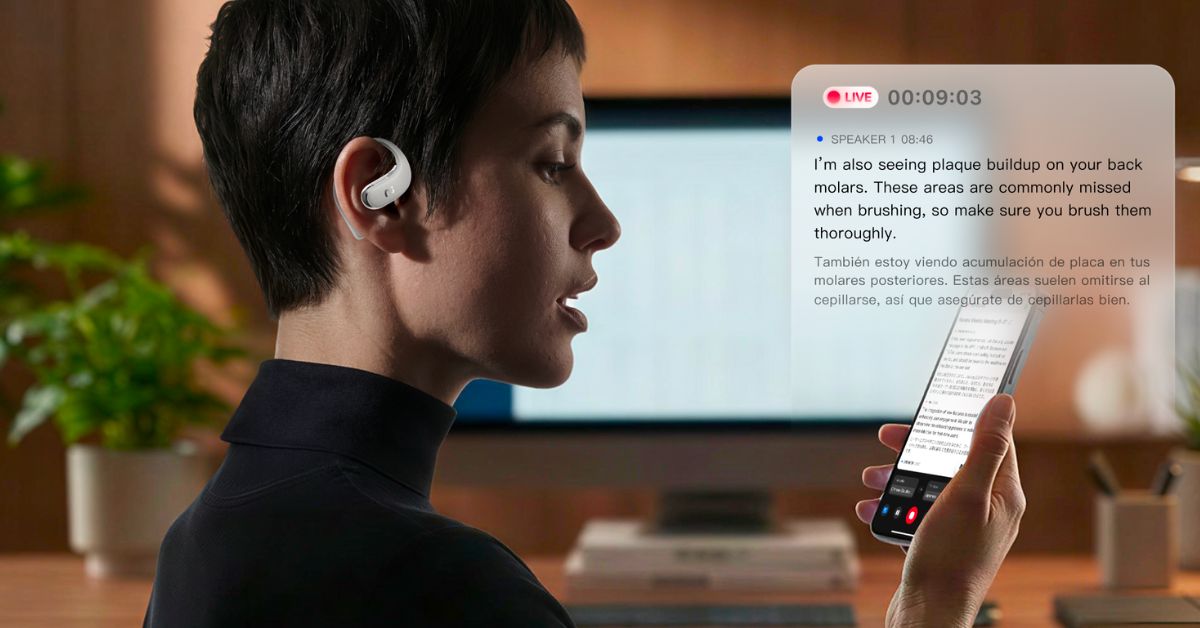
- Transcribe speech to text in real time — turning meetings, calls, and lectures into searchable documents
- Translate spoken language live — so you understand a foreign speaker as they talk
- Generate AI summaries — extracting key points, action items, and decisions automatically
- Record and organize conversations — building a personal knowledge base from your daily interactions
- Identify speakers — labeling who said what in multi-person conversations
The key difference: traditional earbuds are passive audio devices while AI earbuds are active intelligence tools that happen to sit in your ears.
Why Are AI Earbuds Taking Off in 2026?

Three technology shifts made this category viable:
1. On-Device AI Processing
Modern chips can run lightweight AI models directly on the earbud or its charging case. This enables low-latency features like instant recording triggers without needing a phone unlock or app interaction.
2. Cloud LLMs for Deep Understanding
Heavier tasks — summarization, translation, contextual Q&A — are handled by large language models in the cloud. The earbuds stream audio to these models and return structured output in seconds. This is why AI earbuds can produce meeting notes that actually make sense, not just raw transcripts.
3. Always-On Wearability
Earbuds are the one device people already wear for hours. They're in your ears for commutes, workouts, calls, and meetings. Adding AI to something you're already wearing — rather than asking you to carry a separate recorder — removes all friction from the capture process.
What to Look for in AI Earbuds
If you're shopping for AI headphones, these are the features that separate a genuinely useful tool from a gimmick.
Real-Time Transcription
This is the core capability. Ask:
- How many languages does it support? (Top devices handle 50+ languages)
- How does it perform with accents and background noise?
- Is the transcript editable and searchable after the fact?
- Does it distinguish between speakers?
The best AI earbuds use advanced ASR (Automatic Speech Recognition) models trained on diverse accents, combined with directional microphones that focus on the speaker's voice.
AI Summarization and Insights
A raw transcript is useful but time-consuming to review. The best AI earbuds go further:
- Auto-generated summaries — condensing a 60-minute meeting into key points
- Action item extraction — pulling out tasks and next steps
- Mind map generation — visualizing conversation structure
- Custom templates — formatting output for sales calls, interviews, lectures, etc.
The smart AI headphones are not just converting speech to text, but understanding meaning.
Recording Ease and Flexibility

The best recording device is the one you actually use. Key questions:
- Can you start recording with a single tap or gesture? (No phone required?)
- Can it record phone calls and video calls automatically?
- Does it work with conferencing apps like Zoom, Teams, and Google Meet?
- Can you record from the charging case when you're not wearing the earbuds?
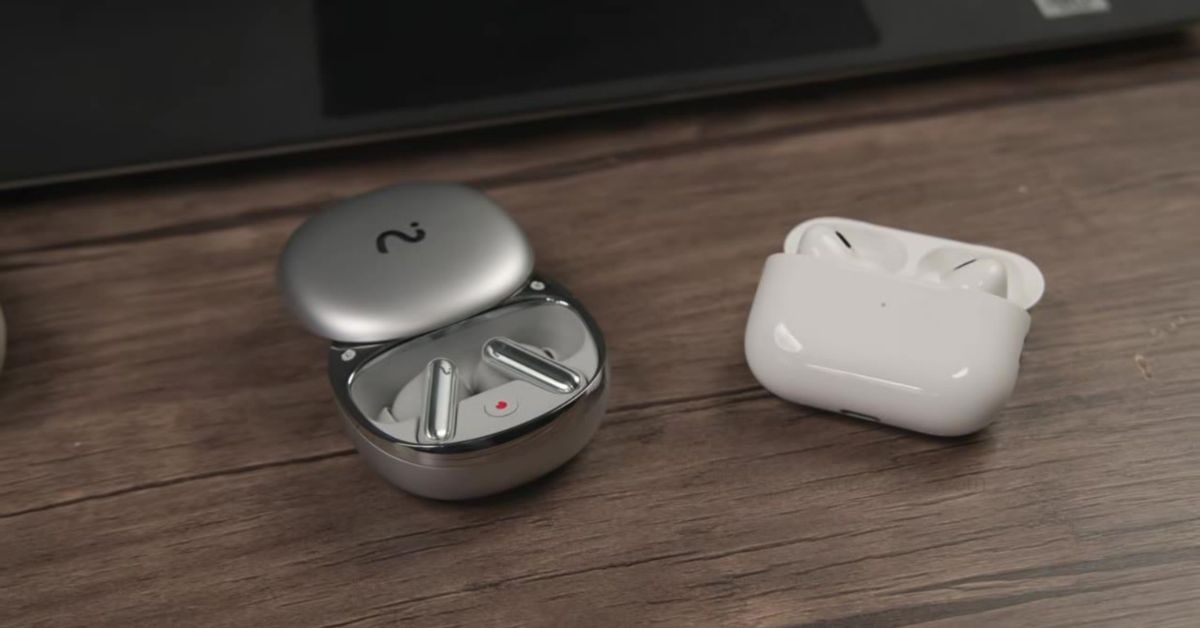
Some devices, like the viaim RecDot, offer FlashRecord™ — a one-tap recording system that works from both the earbuds and the charging case, so you never miss a moment even if the earbuds aren't in your ears.
Translation Capabilities
Real-time translation turns AI earbuds into a universal communication tool. Look for:
- Number of supported languages (the more the better for international use)
- Whether translation is text-only or includes audio playback (hearing the translation in your ear)
- Latency — how quickly does the translated text appear?
Audio Quality
AI earbuds are still earbuds. You'll wear them for music, podcasts, and calls, so sound quality matters:
- Hi-Res audio codec support (LHDC, LDAC, or aptX)
- Active Noise Cancellation (ANC) — critical for focus in noisy environments
- Call quality — clear voice pickup with noise reduction
Don't accept bad sound just because the earbuds have AI features. The best options deliver both.
Battery Life
AI features (always-on microphones, cloud connectivity, processing) use more power than passive listening. You need:
- At least 6 hours per charge from the earbuds alone
- 30+ hours total with the charging case
- Fast charging for quick top-ups between meetings
Comfort and Weight
If your earbuds hurt after two hours, you won't wear them for a full workday. Consider:
- Weight per earbud (under 5g is excellent for in-ear designs)
- Ear tip options and fit
- In-ear vs. open-ear design (see section below)
Privacy and Security
You're recording sensitive conversations — client calls, medical discussions, legal meetings. Demand:
- ISO 27001 information security certification
- SOC 2 Type II audit compliance
- HIPAA compliance for healthcare use
- Customizable recording notifications for transparency
- Clear data retention and deletion policies
Companion App and Ecosystem
The earbuds capture audio, but the real value lives in the software:
- Is there a mobile app + web platform for reviewing transcripts?
- Can you organize recordings by project or topic?
- Can you search across all your past conversations?
- Does it support file upload (adding external recordings)?
- Are there export options for sharing notes?
In-Ear vs. Open-Ear AI Earbuds
This is a fundamental design choice that affects comfort, sound, and use cases:
| Factor | In-Ear AI Earbuds | Open-Ear AI Earbuds |
|---|---|---|
| Noise Isolation | Excellent (sealed + ANC) | Minimal (hear surroundings) |
| Best For | Calls, focused work, travel, noisy spaces | All-day office wear, safety-aware use, long sessions |
| Sound Quality | Richer bass, fuller immersion | Clear but lighter, less bass |
| Comfort (2+ hours) | Good, but ear canal pressure possible | Excellent — no ear canal contact |
| Weight | Lighter | Usually heavier |
| ANC | ✅ (up to 48dB) | Limited or call-only |
| Battery | 6–10 hours | 12–20+ hours |
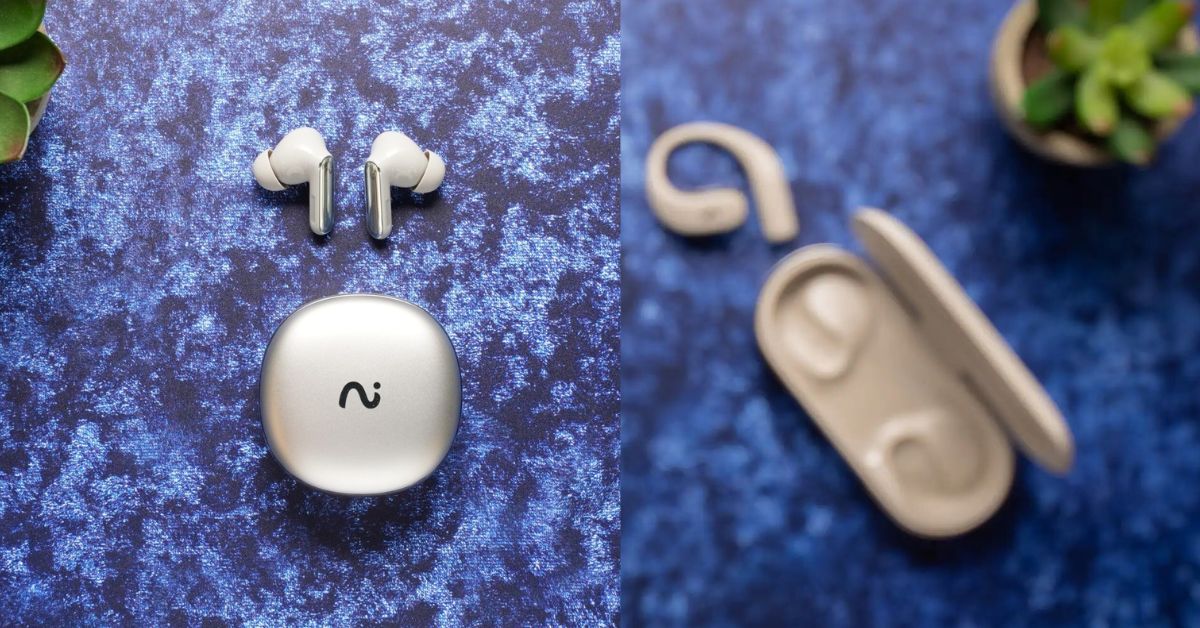
The takeaway: Choose in-ear if you prioritize sound quality and noise cancellation. Choose open-ear if you need all-day comfort and situational awareness.
For example, the viaim RecDot is an in-ear design with 48dB ANC and 4.8g weight — built for focused call work and premium audio. The viaim OpenNote takes the open-ear approach with 19-hour battery per charge — designed for people who wear earbuds all day and need to hear their environment.
AI Earbuds vs. AI Note Taker Software
You might wonder: why not just use Otter.ai, Fireflies, or another meeting note-taking apps?
Here's the critical difference:
| Capability | Meeting Bots (Otter, Fireflies, etc.) | AI Earbuds |
|---|---|---|
| Scheduled online meetings | ✅ | ✅ |
| Phone calls | ❌ or limited | ✅ Automatic |
| In-person conversations | ❌ | ✅ |
| On-the-go voice memos | ❌ | ✅ |
| Wearable / always ready | ❌ | ✅ |
| Works without internet scheduling | ❌ | ✅ |
| Premium audio playback | ❌ | ✅ |
| Visible to other participants | ⚠️ (bot joins call) | ❌ Discreet |
AI note-taking apps are powerful for scheduled video calls, but they can't help with the unscheduled conversations that often matter most — the quick hallway chat, the unexpected phone call, the brainstorm that happens over coffee. AI earbuds cover everything because they're always with you.
Best Use Cases for AI Earbuds in 2026
Sales Professionals
Capture every detail from client calls without dividing attention between listening and note-taking. AI summaries automatically extract objections, pricing discussions, and next steps — so you can focus on selling.
Remote Workers and Hybrid Teams
Back-to-back Zoom calls leave no time to organize notes. AI earbuds transcribe every call and deliver structured summaries immediately after. Review yesterday's action items in seconds, not minutes.
Students and Researchers
Lecture halls generate hours of spoken content. AI earbuds turn this into searchable, summarized notes — study smarter, not harder. Multi-language transcription is especially valuable for international students.
Journalists and Content Creators
Field interviews are unpredictable. AI earbuds capture natural conversation without the awkwardness of placing a recorder on the table. Transcripts are ready for editing immediately.
Multilingual Professionals
International calls, conferences, and travel become frictionless when your earbuds translate in real time. No more relying on interpreters for routine conversations.
Healthcare and Legal
Accurate documentation is mandatory but time-consuming. AI earbuds create a verifiable record of patient consultations or client meetings while professionals stay focused on the human in front of them. (Ensure the device meets HIPAA/SOC 2 compliance requirements.)
What Makes viaim Different in This Category?
Full disclosure: we make AI earbuds. But the reason we built viaim RecDot and OpenNote is that existing solutions forced a tradeoff between audio quality and intelligence. We didn't think that tradeoff was necessary.
Here's what our approach delivers:
- 78-language transcription and translation — more than most competitors in this space
- FlashRecord™ — one-tap recording from earbuds or charging case, no phone required
- Full AI suite — summaries, mind maps, action items, custom templates, regeneration with prompts
- Vitana AI assistant — ask questions across all your past conversations and get answers from your own knowledge base
- Spaces — organize recordings by project, client, or topic for better AI context
- Premium audio — Hi-Res codecs + up to 48dB ANC (RecDot) or 53-hour battery (OpenNote)
- Enterprise-grade security — ISO 27001, ISO 27701, SOC 2 Type II, HIPAA, EN 18031
- 600 minutes free per month — no subscription required to start
Techradar reviewer Paul Hatton said it well: "It really is a one-stop shop for managing your professional life. I found that these buds fit seamlessly into all aspects of my life, but especially at work."
How to Choose: A Quick Decision Framework
Still not sure which AI earbuds are right for you? Use this framework:
| If you need... | Look for... |
|---|---|
| Maximum noise cancellation + best sound | In-ear design with ANC (40dB+) |
| All-day comfort + hear surroundings | Open-ear design with long battery |
| International language support | 50+ language transcription + live translation |
| Recording without wearing earbuds | Charging case recording feature |
| Professional security requirements | ISO 27001 + SOC 2 + HIPAA certifications |
| Minimal subscription commitment | Generous free tier (500+ min/month) |
| Integration with video calls | Automatic call detection + transcription |
Frequently Asked Questions
Do AI earbuds need constant internet?
Recording works offline on most devices. Transcription, translation, and summarization typically require an internet connection since they use cloud AI models. Some basic transcription can work offline depending on the device.
Can AI earbuds record phone calls?
Yes — most AI earbuds automatically detect and transcribe both cellular phone calls and internet calls (Zoom, Teams, FaceTime, etc.). This works because the earbuds already handle the call audio.
Are AI earbuds legal to use for recording?
Recording laws vary by jurisdiction. Most regions require at least one-party consent. viaim AI note-taking earbuds include customizable recording notifications so you can alert others when recording. Always check your local laws.
How long do AI earbud transcriptions take?
Real-time transcription appears as the conversation happens (within 1–2 seconds of speech). AI summaries typically generate within 30–60 seconds after a recording ends.
Can I use AI earbuds just as regular earbuds?
Absolutely. The best AI earbuds are designed to be your primary everyday earbuds for music, podcasts, and calls — with AI features available on demand. You're not sacrificing audio quality for intelligence.
The Bottom Line
AI earbuds in 2026 aren't a gimmick — they're a genuine category shift. The best ones deliver premium audio quality and real-time intelligence that saves hours of manual note-taking every week.
When choosing, focus on what matters: transcription accuracy, language support, recording flexibility, audio quality, battery life, security credentials, and the companion software ecosystem. A device that nails all of these becomes indispensable fast.
If you're ready to try AI earbuds that deliver on every front — 78 languages, FlashRecord™, AI summaries, Hi-Res audio, and enterprise security — take a look at the viaim RecDot (in-ear, $199.99) or viaim OpenNote (open-ear, $169.99). Both include 600 minutes of free transcription per month, free shipping, and a 30-day risk-free return.
Share:
viaim RecDot vs OpenNote: Which AI Note-Taking Earbuds Are Right for You?
Do You Need AI Earbuds If You Already Have AirPods?