

You’ve been there.
The meeting starts, and you genuinely want to pay attention. You open your notes app—or grab a notebook—and tell yourself: this time will be different.
Three minutes later?
You’re nodding along… but you have no idea what was just said.
Or maybe you caught the first half of a sentence, started writing it down, and now you're staring at a fragment that makes zero sense without the context you already lost.
Sound familiar?
You’re not alone. And more importantly, there’s nothing wrong with you.

The ADHD Meeting Struggle Is Real
For people with ADHD (or honestly, anyone in today’s distraction-heavy work environment), meetings are uniquely difficult.
Here’s what’s actually happening:
You miss the beginning
By the time you get ready—open the right tab, find your notebook—you’ve already missed the agenda or key context.
You can’t listen and write at the same time
Your brain switches between listening mode and writing mode—but not both.
So you either:
- Half-listen while writing unusable notes
- Or fully listen… and end up with nothing recorded
You zone out without realizing it
One moment you’re focused. The next?
You’ve been staring at the same slide for five minutes, and didn’t notice the moment you drifted.
You leave more confused than when you started
Even if you tried your best, the details slip away fast.
By the time you’re back at your desk, you’re wondering:
- What did we decide?
- What am I responsible for?
- What was this meeting even about?
This isn’t laziness. It’s not a motivation issue. It’s cognitive overload—and it’s exhausting.
Why Traditional Advice Doesn’t Work
You’ve probably heard this before:
- “Just take better notes.”
- “Try to focus harder.”
- “Set reminders to stay present.”
Here’s the truth:
None of these works—because they ask you to fight your own brain.
- Note-taking splits your attention
- “Focus harder” ignores how attention actually works
- Reminders add more cognitive load, not less
It’s like telling someone with a broken leg to run faster.
The real issue?
Meetings weren’t designed for brains that don’t process information linearly.
They’re:
- Information-dense
- Fast-paced
- Built on the assumption that everyone can listen, process, and remember simultaneously
That’s not realistic for many people.
What Actually Works: Stop Holding Everything in Your Head
Here’s the shift:
👉 Stop trying to remember everything. Instead, offload the mental load.
You already do this everywhere else:
- You save contacts instead of memorizing numbers
- You use a calculator instead of doing mental math
So why rely on memory during meetings?
A better approach:
- Let go of capturing everything
- Focus on the conversation
- Trust that important information is recorded somewhere
When your brain isn’t busy “recording,” it can actually engage.
A Smarter Way to Handle Meetings

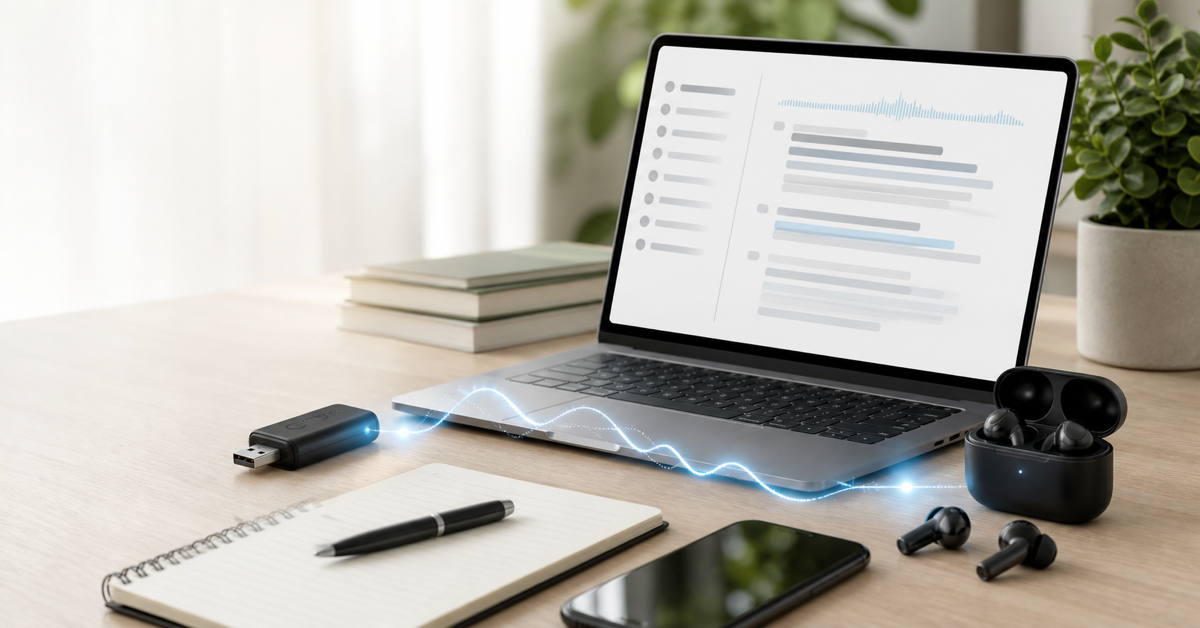
This is where AI note-taking devices like viaim change the experience.
Instead of forcing yourself to multitask, you let the meeting capture itself.
| Traditional Notes | viaim |
|---|---|
| Miss context | Full conversation captured |
| Manual effort | Automatic |
| Easy to forget | Searchable |
| Distracts you | Keeps you present |
With viaim:
- Meetings are automatically recorded
- Key decisions are identified
- Action items are extracted
- Summaries are organized and searchable
What changes:
- You show up fully present
- You stop worrying about missing things
- You leave with clarity—not confusion
It’s not about replacing your brain. It’s about giving it less to carry.
When This Matters Most
This approach is especially powerful in:
Daily standups
Fast updates that are easy to forget
Client calls
Where details and commitments matter
Strategy meetings
Where understanding > note-taking
1-on-1s
Where connection matters more than typing
If you’ve ever thought,
“I wish I could just focus instead of taking notes”— this is for you.
The Bottom Line
If meetings leave you overwhelmed, the problem isn’t you. It’s the system.
Trying to rely on your brain alone no longer scales in information-heavy environments.
The better way:
- Let meetings capture themselves
- Let notes organize themselves
- Let your brain focus on thinking and engaging
You deserve to leave meetings feeling clear—not lost.


Share:
viaim OpenNote Wins iF Design Award 2026
viaim vs Note-Taking Apps: Which One Actually Saves You Time?